



Do You Need Planning Permission or Building Regulations for a Roof Terrace Balustrade in the UK? (2026 Guide)
Roof terraces are one of the most effective ways to create usable outdoor space in urban homes and developments — particularly where garden space is limited. However, because roof terraces are elevated and exposed, they introduce important safety, structural, and compliance considerations under UK building regulations.
A common question we hear is:
“Do I need planning permission or building regulations for a roof terrace balustrade in the UK?”
In most cases, a roof terrace balustrade must be designed as a safety guarding system and needs to meet appropriate UK guidance. Whether you need planning permission depends on the type of roof terrace, the building, and whether the changes affect the external appearance of the property.
This guide explains:
-
When planning permission may apply
-
When building regulations / compliance guidance matters
-
What to consider for height, exposure, and fixing
-
How to choose a suitable roof terrace balustrade system
This guide is based on general UK planning principles and building regulation guidance to help homeowners, developers and property managers understand when approval or compliance is required before installation.
Quick Answer
In the UK, roof terrace balustrades must meet safety guidance for guarding at height under Building Regulations (typically Approved Document K). Planning permission may also be required if the roof terrace is new, alters the external appearance of the building, increases overlooking, or is located within a conservation area or listed property.
Even where planning permission is not required, building regulations compliance still applies because a roof terrace balustrade functions as a safety-critical guarding system.

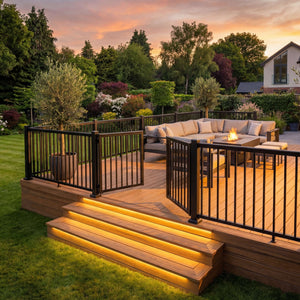
Roof terrace balustrades provide essential safety while preserving open views.
Section 1: Planning Permission vs Building Regulations (What’s the Difference?)
This is where people get confused — because planning permission and building regulations do different jobs.
Planning Permission
Planning permission is about how a change affects the property externally and how it impacts neighbours, privacy, and the surrounding area. A roof terrace is often considered a significant alteration because it changes how the roof is used and can introduce overlooking.
Roof terraces themselves can sometimes be considered a change of use to an external leisure area, which in certain situations triggers formal planning review.
You may need planning permission if:
-
You are creating a new roof terrace (change of use for the roof)
-
The balustrade changes the external appearance of the building
-
The terrace increases overlooking or affects privacy
-
The property is a flat/apartment building (often stricter)
-
The building is listed or in a conservation area
-
You’re in an area with specific permitted development restrictions
Because roof terraces can create overlooking and privacy concerns, local planning authorities often assess them carefully, particularly in dense urban areas.
Building Regulations / Compliance Guidance
Building regulations and compliance guidance focus on safety and structural integrity. In England, these requirements are generally covered under Approved Document K (Protection from Falling, Collision and Impact), which sets out guidance for guarding in elevated areas.
A roof terrace balustrades is classed as a guarding system. As such, it must be designed to address:
-
Height and fall risk
-
Loads (people leaning, wind exposure)
-
Secure fixings into the roof structure
-
Safe materials and correct glass specification
Even where planning permission is not required, compliance with relevant building regulations remains mandatory.

Section 2: Roof Terrace Balustrade Height & Safety Requirements in the UK
Because roof terraces are elevated external spaces, balustrades must be designed to provide effective guarding against falls. Height, loading, and fixing methods all play a critical role in compliance and long-term safety.
What Height Should a Roof Terrace Balustrade Be?
In the UK, guarding heights are generally guided by Approved Document K (Protection from Falling, Collision and Impact), which forms part of UK Building Regulations relating to fall protection in elevated areas.
In the UK, guarding heights are generally guided by Approved Document K (Protection from Falling, Collision and Impact), which forms part of UK Building Regulations relating to fall protection in elevated areas.
For roof terraces:
-
Typical Minimum Height: 1100mm for elevated external guarding in residential settings.
-
Higher guarding may be required depending on the building type and specific design
-
Commercial or multi-occupancy buildings may have stricter requirements
The exact height requirement can vary depending on whether the property is:
-
A private dwelling
-
An apartment building
-
A commercial development
-
A mixed-use or high-rise building
Because roof terraces are often significantly elevated, ensuring correct balustrade height is one of the most important safety considerations.
Structural Loading & Wind Exposure
Height alone is not enough.
A roof terrace balustrade must also be capable of resisting:
-
Horizontal loads (people leaning or crowd pressure)
-
Wind loads (particularly in exposed rooftop environments)
-
Dynamic forces from regular use
*In higher-risk or commercial rooftop settings, designers may also reference standards such as BS 6180 to ensure guarding systems are capable of withstanding expected loads at height.
Wind exposure is especially important on roof terraces and penthouses. Elevated locations experience greater wind pressure, which means balustrade systems must be securely fixed and appropriately specified.
This is why professionally engineered aluminium and glass balustrade systems are tested to meet structural load requirements for elevated and exposed environments — not just designed for appearance.

Glass Specification for Roof Terraces
Where glass panels are used, the specification is critical.
Roof terrace glass balustrades typically use:
-
Toughened safety glass
-
Laminated glass where required
-
Correct thickness based on span and load requirements
Glass should always be selected in accordance with structural and safety guidance, particularly in high-level installations.
Fixing Methods & Roof Structure
The balustrade must be securely fixed into the roof structure — not just surface-mounted without structural consideration.
Common fixing methods include:
-
Base channel systems
-
Surface-mounted posts
-
Side-mounted (face-fixed) systems
Each fixing type must be compatible with:
-
The roof construction
-
Waterproofing details
-
Structural load capacity
Incorrect fixing can compromise both safety and the integrity of the roof system.
In higher-risk contexts such as commercial or public rooftop spaces, designers also consider BS 6180 and European load standards to verify that balustrade performance aligns with expected usage.
Why Professional Specification Matters
Because roof terraces combine height, exposure, and structural considerations, they are among the most demanding applications for balustrade systems.
This is particularly important for apartment buildings, penthouses, and commercial rooftops where compliance and long-term performance are critical.
Choosing a properly designed roof terrace balustrade system ensures:
-
Compliance with UK guidance
-
Long-term structural stability
-
Reduced maintenance
-
Confidence for occupants
If in doubt, always seek guidance from a qualified installer, architect, or structural professional before installation.
Section 3: When Is Planning Permission Required for a Roof Terrace?
Planning permission and building regulations are often confused — but they address different issues.
While building regulations focus on safety and structural performance, planning permission is concerned with:
-
How the roof terrace affects the external appearance of the building
-
Whether it impacts neighbouring properties
-
How it alters the use of the roof space
-
Its visibility from public viewpoints
When Planning Permission Is More Likely to Be Required
You may need planning permission for a roof terrace if:
-
You are creating a new roof terrace where one did not previously exist
-
The terrace introduces a new external use at height
-
The balustrade changes the architectural appearance of the property
-
The balustrade is clearly visible from the street
-
The terrace increases overlooking of neighbouring properties
-
The building is a flat, apartment block, or mixed-use development
-
The property is listed or located in a conservation area
-
The local authority has specific permitted development restrictions
In some cases for single residential dwellings, a roof terrace may fall within permitted development rights. However, this depends on local authority rules, property type, and whether the changes affect privacy or the building’s external appearance.
Because roof terraces sit at height, planning authorities often assess:
-
Privacy impact
-
Visual impact
-
Scale and massing
-
Relationship to surrounding buildings
What About Replacing an Existing Balustrade?
If a roof terrace already exists and you are replacing an existing balustrade:
-
Planning permission may not be required
-
However, it depends on whether the new system materially changes the building’s appearance
For example:
-
Replacing old metal railings with slimline glass balustrades may alter the façade
-
Increasing balustrade height could trigger new considerations
-
Changing from solid screening to clear glazing may affect privacy
Always confirm with your local planning authority before proceeding.
Even if planning is not required, your roof terrace balustrade system must still comply with UK safety guidance for guarding at height.

Key Point to Remember
Planning permission and building regulations are separate processes.
Even if planning is not required, your roof terrace balustrade must still comply with UK safety guidance for guarding at height.
When in doubt, consult:
-
Your local planning authority
-
An architect
-
A building control officer
FAQs – Roof Terrace Balustrades & Planning in the UK
1. Do all roof terraces require planning permission in the UK?
No. Planning permission is not always required. It depends on whether the roof terrace changes the use of the roof, affects the building’s appearance, impacts privacy, or is located in a protected area such as a conservation zone or listed property.
2. Do roof terrace balustrades need to meet building regulations?
Yes. Roof terrace balustrades must meet UK building regulations for guarding at height. Approved Document K provides guidance on minimum height and structural performance to help prevent falls in elevated external areas.
3. What is the minimum height for a roof terrace balustrade in the UK?
For elevated external areas such as roof terraces, guarding is typically required to be at least 1100mm high. While 1100mm is commonly applied for elevated external guarding, requirements may vary depending on building type and usage.
4. Does replacing an old balustrade require planning permission?
Not always. If the replacement does not materially alter the building’s appearance, planning permission may not be required. However, significant design changes — such as switching from solid panels to clear glass — could trigger planning considerations.
5. Are glass balustrades compliant for roof terraces?
Yes, provided they are correctly specified. Toughened and laminated safety glass must be selected based on structural loading and wind exposure, particularly for high-level installations.
6. Who should I consult before installing a roof terrace balustrade?
You should consult:
-
Your local planning authority (if unsure about permission)
-
A building control officer
-
A structural engineer or qualified installer
7. Can a non-compliant roof terrace balustrade affect property resale?
Yes. Roof terrace alterations that do not meet planning or building regulation requirements may create issues during property sale, particularly if approval or certification cannot be demonstrated. Ensuring compliance at installation stage can help avoid complications later.