



Black vs Silver Aluminium Balustrade: Which Finish Should You Choose?
When you buy an aluminium balustrade, you are not just choosing a safety system. You are choosing a design feature that sits in your garden, on your decking, or along your balcony for many years. The finish you pick affects how it looks with your home, how it ages, and how easy it is to keep clean.
Black and silver are the two most popular aluminium balustrade finishes in the UK. Both are widely available. Both look great in the right setting. And both come with practical advantages worth knowing about before you order.
In this guide, we compare black and silver aluminium balustrades across aesthetics, maintenance, versatility, and the type of spaces they suit best. By the end, you will have a clear picture of which finish belongs on your project.
How Aluminium Balustrade Finishes Work
Before comparing black and silver, it helps to understand how aluminium gets its colour in the first place.
Most aluminium balustrades sold in the UK use a powder-coated finish. The aluminium profile is cleaned, primed, and then coated with a dry powder pigment that is baked on at high temperature. The result is a hard, even coating that bonds tightly to the metal surface and resists chipping, scratching, and UV fading far better than liquid paint.
Silver or natural aluminium finishes are either left as brushed or mill-finish aluminium, anodised for extra protection, or coated in a light silver powder coat. Anodised aluminium has an electrochemical surface layer that is extremely hard and bonds at a molecular level, giving even better corrosion resistance than powder coating.
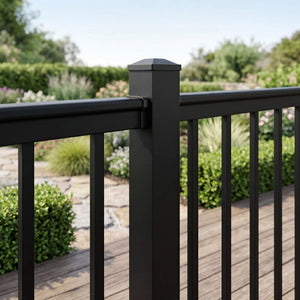
Black aluminium balustrades use a powder coat in matt or gloss black, often specified as RAL 9005 jet black or a softer matt black. The powder coat finish on both colours is equally durable when applied correctly. The choice between them is primarily a design and lifestyle decision rather than a technical one.
The Case for Black Aluminium Balustrade
Black has become the dominant choice for modern UK homes and it shows no sign of slowing. In 2025 and 2026, matt black aluminium is one of the most requested finishes across residential balustrade, window, and door installations. It suits contemporary architecture clearly and deliberately.
Why Black Works So Well
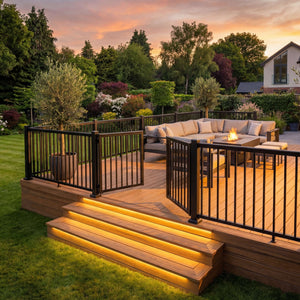
Black creates strong visual contrast. Against light-coloured render, pale stone patios, composite decking in grey or cream tones, or white rendered walls, a black balustrade stands out cleanly. It defines edges, frames views, and gives a space a designed, intentional look.
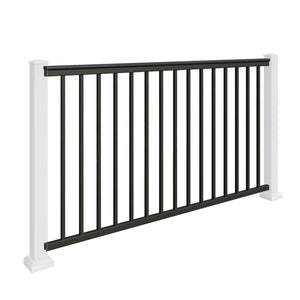
Black also reads as a premium finish. It signals quality without requiring any ornate detailing. A simple vertical rail system in matt black powder coat looks considered and high-end even in a modest garden setting.
Modern design trends strongly favour black aluminium. Architects and designers specifying residential balustrades in 2025 and 2026 are overwhelmingly choosing black or anthracite over silver. If you are renovating a contemporary home or creating a modern outdoor space, black is the current industry default for good reason.
Our black aluminium railing system at The Outdoor Look is one of our most popular finishes. It pairs particularly well with composite decking ranges, especially in grey, charcoal, and neutral-toned boards.
Where Black Performs Best
-
Modern or contemporary homes with render, concrete, or dark brick exteriors
-
Decking areas with grey, charcoal, or neutral-toned composite or timber boards
-
Balconies and roof terraces where a strong architectural statement is the goal
-
Gardens with dark-stained timber fencing, dark stone paving, or industrial-style features
-
Holiday lets and rental properties seeking a premium, low-maintenance finish
The Case for Silver Aluminium Balustrade
Silver aluminium has been the classic balustrade finish for decades. It remains popular and offers genuine advantages in certain applications and settings.
Why Silver Works So Well
Silver or natural aluminium has a lighter, more neutral quality. It does not create strong contrast in the same way black does. Instead, it sits quietly in a space, blending with its surroundings rather than competing with them.
In period properties, traditionally styled homes, or gardens with warm natural tones, a silver aluminium balustrade often feels more harmonious. It does not demand attention the way black does, which is either its strength or its weakness depending on your design goal.
Silver finishes also show less visible dust and pollen in day-to-day use. In a garden environment where organic matter, dust, and pollen are constantly present, a silver or light grey finish is more forgiving between cleans than a dark black surface.
Silver aluminium is also the preferred choice for coastal locations. Although both finishes are powder coated and offer good corrosion resistance, marine-grade anodised silver aluminium is the most robust option available for properties within a few miles of the sea.
Where Silver Performs Best
-
Traditional or period properties with warm stone, red brick, or classic cream exteriors
-
Coastal or exposed locations where maximum corrosion resistance is a priority
-
Gardens with warm timber decking tones, terracotta, or sandstone paving
-
Spaces where you want the balustrade to blend in rather than stand out
-
Properties where a neutral, timeless finish is preferred over a trend-led choice
Side-by-Side Comparison
|
Feature |
Black Aluminium |
Silver Aluminium |
|
Current trend alignment |
Very high (dominant finish 2025 to 2026) |
Moderate (classic, timeless) |
|
Contrast with light surfaces |
Strong, architectural |
Subtle, blends in |
|
Dust and pollen visibility |
More visible |
Less visible |
|
Coastal suitability |
Good (powder coat) |
Excellent (anodised option available) |
|
Works with modern homes |
Excellent |
Good |
|
Works with traditional homes |
Good with care |
Excellent |
|
Design statement |
Bold and deliberate |
Quiet and versatile |
|
Pairs with grey composite decking |
Excellent |
Good |
|
Pairs with warm timber tones |
Good |
Excellent |
What About Anthracite Grey?
It is worth mentioning anthracite grey as a third option that sits between black and silver. RAL 7016 anthracite has been one of the best-selling aluminium colours in UK architecture for over a decade. It offers the dark, clean look of black without the starkness of pure matt or gloss black.
Anthracite is softer than black and more versatile across different property styles. It works with red brick homes where pure black can feel slightly too harsh. It reads as modern and considered without being quite as trend-specific as jet black. If you are unsure between black and silver, anthracite grey is often the middle ground that works across the widest range of home styles.
Maintenance: Is There a Practical Difference?
Both black and silver powder-coated aluminium require the same basic maintenance. A wipe down with mild soapy water and a soft cloth a few times a year is all either finish needs to stay clean and performing well.
The only practical difference is what shows between cleans. Black surfaces show dust, pollen, watermarks, and bird droppings more visibly than silver or light grey. If your balustrade is in a location that attracts heavy pollen in spring or is under trees where debris falls, you may find yourself cleaning a black finish more frequently.
Neither finish requires painting, treating, sealing, or any form of annual maintenance beyond cleaning. This is one of aluminium's biggest advantages over timber or wrought iron balustrades, which require regular treatment to prevent corrosion and deterioration.
For coastal properties where salt air is a factor, choose grade 316 stainless steel hardware for fixings even if the aluminium profile itself is powder coated. Salt air works on exposed metal fixings faster than on the coated aluminium sections. Using the right grade of fixing prevents corrosion before it starts.
Matching Your Finish to Your Decking
If you are installing an aluminium balustrade alongside composite decking, the finish decision becomes much easier when you match the two products together.
|
Decking Colour / Tone |
Recommended Balustrade Finish |
|
Charcoal, slate, graphite grey |
Black or anthracite |
|
Silver grey, light grey |
Black, anthracite, or silver |
|
Teak brown, golden oak tones |
Silver or anthracite |
|
Cream or light stone |
Black (strong contrast) or silver (subtle) |
|
Natural wood tones |
Silver or anthracite |
|
Dark espresso or black decking |
Black (tonal match) or silver (contrast) |
You can browse our aluminium railing range at The Outdoor Look to see available colours and finishes. We stock black powder-coated aluminium systems designed to pair directly with our composite decking ranges, making it easy to create a cohesive outdoor scheme.
Common Mistakes to Avoid
Choosing a finish based solely on a product photo. Powder coat finishes look different depending on light conditions. A matt black balustrade photographed in bright sunshine looks very different from the same product on a dull UK autumn afternoon. Request a sample and look at it in natural daylight before committing.
Ignoring surrounding materials. A black balustrade on dark brown decking next to dark brick can feel heavy and oppressive. Balance dark finishes with lighter paving, render, or garden furniture to keep the overall space feeling open.
Mixing finishes across one project. Using black posts with silver rails or black balustrade with silver gate hardware creates a disjointed look. Pick one finish and carry it through all metalwork on the project consistently.
Underestimating pollen visibility in spring. If your garden is surrounded by trees or in a high-pollen area, a black finish will need more frequent wipe-downs from March to June. Factor this in if genuinely low maintenance is your priority.
Pro Tips From Experience
Order a physical sample post or rail section before committing to a full order. Looking at a small sample in your own garden, against your own decking and walls, in your own light conditions is far more reliable than deciding from a website image.
If your budget allows, pair a black aluminium balustrade with black composite decking fascia boards and black hidden fixings. A fully coordinated black scheme across decking edge trim, balustrade, and outdoor furniture frames creates a genuinely professional result.
Check that the powder coat thickness on any product you buy is at least 60 microns. This is the industry standard minimum for exterior architectural aluminium. Thinner coatings chip and fade more quickly, especially on edges and corners where wear is greatest.
For guidance on current UK architectural finish trends in residential design, the Royal Institute of British Architects publishes regular insights at architecture.com, which can help you understand how finish choices align with wider design movements.
Frequently Asked Questions
Q: Which is more popular, black or silver aluminium balustrade in the UK in 2026?
Black is currently the most popular finish for new residential balustrade installations in the UK. Matt black powder-coated aluminium has dominated new-build and renovation projects for several years and remains the leading choice in 2026. It suits the contemporary home styles that make up the majority of new UK residential builds. Silver remains popular in traditional property settings and coastal locations where anodised silver aluminium offers superior corrosion resistance. Anthracite grey sits between the two and is one of the best-selling colours across UK architectural aluminium products overall.
Q: Does black aluminium balustrade fade over time?
High-quality black powder-coated aluminium should not fade noticeably for 10 to 15 years under normal UK weather conditions. The powder coat baking process creates a UV-stable finish that resists colour change caused by sunlight. However, the quality of the powder coat matters significantly. Products with thinner coatings or lower-quality pigments may begin to fade or chalk within a few years of outdoor exposure. Always check that the powder coat thickness meets the 60-micron minimum standard for exterior use, and choose products from suppliers who can confirm UV resistance ratings.
Q: Can I paint my silver aluminium balustrade black if I change my mind?
You can paint aluminium, but it is not straightforward and the results are rarely as durable as the original factory powder coat. Aluminium needs to be thoroughly cleaned, degreased, and primed with an etch primer before any topcoat is applied. Standard exterior paint will not bond well to bare aluminium without this preparation. A professional spray application gives far better results than a brush or roller. In most cases, if you decide you want a different finish, replacing the sections gives a better long-term result than attempting to repaint them on site.
Q: Is black aluminium balustrade harder to keep clean than silver?
Black aluminium shows dust, pollen, water spots, and general outdoor debris more visibly than silver aluminium. This means it needs more frequent wiping to maintain a sharp appearance. Both finishes require exactly the same cleaning method: a soft cloth and mild soapy water. Neither needs specialist products or annual treatment. The practical difference is mainly about frequency rather than effort. In a sheltered outdoor space the difference is minimal. In a garden with trees or in a high-pollen area, you may find yourself wiping down a black balustrade noticeably more often from spring through to autumn.