




Football Fencing Grants — How to Fund Your Pitch Perimeter Fence
Also reading: Football Pitch Fencing FA Ground Grading Guide Rugby Union Fencing Rugby League Fencing
Football Fencing Grants — How to Fund Your Pitch Perimeter Fence
There is one national grant route for a pitch perimeter barrier in England, and it is not the one most clubs assume. The Premier League Stadium Fund contributes 70% towards a new barrier — and up to 100% where a solid brick, breeze block or concrete wall has to come out. This page explains who qualifies, how much you can get, and what your application needs.
✓ 70% Standard Contribution ✓ Up to 100% for Solid Wall Removal ✓ Steps 1–6 & Women's Tiers 1–4 ✓ No Preferred Supplier List ✓ Free Spec Docs Provided
Start here: the Football Foundation does not fund pitch perimeter barriers
This catches out a lot of clubs. Pitch perimeter barriers sit on the Football Foundation's explicit "cannot fund" list, and clubs at Steps 1–6 of the National League System or Tiers 1–4 of the Women's Football Pyramid cannot apply to the Foundation at all. The Foundation's fencing grant is real — but it is for boundary and security fencing at non-NLS sites, which is a different thing to the barrier that runs round your playing area. Apply to the wrong body and you lose a season.
Premier League Stadium Fund — the route for pitch perimeter barriers
The Premier League Stadium Fund awards capital grants to clubs to improve stadium facilities. Pitch perimeter barriers have their own dedicated grant stream, with published contribution rates and technical criteria.
Standard new barrier
70%
Club funds the remaining 30%
The Fund contributes 70% of the total project cost for a new pitch perimeter barrier. Your club finds the balance from its own funds or partnership funding.
- Eligible: Steps 1–6 of the men's National League System, Tiers 1–4 of the Women's Football Pyramid, and clubs promoted into the EFL
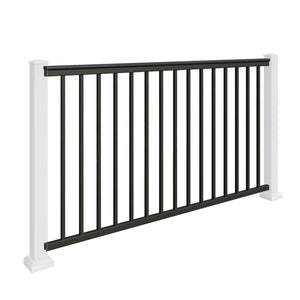
- uPVC or galvanised steel are the accepted materials for new barriers
- Minimum 1.83m from the edge of the playing surface; 2.75m where the club requires Grade 1
- No gap between the barrier and the spectator hardstanding
- Provision required for player, match official, maintenance and emergency vehicle access
- No preferred supplier list
Removing or protecting a solid wall
Up to 100%
Where a solid barrier must be removed or protected
The FA's 2026/27 Stadium Accreditation Criteria prohibit solid brick, breeze block and concrete pitch perimeter barriers at Steps 1–6 and Women's Tiers 3–4. Where a club is required to remove or protect one, the Fund will contribute up to the full cost.
- Applies where removal or protection of an existing solid brick, breeze block or concrete barrier is required
- Roughly 900 clubs are affected by the criteria change
- Around 160 clubs have been contacted directly by the FA
- Covers the replacement barrier as well as the removal works
- Talk to your PLSF Technical Manager before you specify anything
Cumulative caps per five-year period
The contribution rate is not the whole picture. Each club has a cumulative ceiling on what it can draw from the Fund across a rolling five-year period, set by the level it plays at.
| Level | Cumulative cap, five-year period |
|---|---|
| Step 1 | £400,000 |
| Step 2 | £250,000 |
| Steps 3–4 | £150,000 |
| Steps 5–6 | £100,000 |
| Women's Tier 1 | £750,000 |
| Women's Tier 2 | £400,000 |
| Women's Tier 3 | £150,000 |
| Women's Tier 4 | £100,000 |
A full perimeter barrier on a standard pitch sits comfortably inside every one of these ceilings — but if your club has already drawn on the Fund for floodlights, a stand or changing rooms in the last five years, check what headroom you have left before you plan the project.
Step 7 and below — say it plainly
The Premier League Stadium Fund does not fund work to meet Grade 7. Combined with the Football Foundation exclusion, a club at Step 7 or below has no national grant route for a pitch perimeter barrier. That is the honest position and we would rather you heard it from us than found out three months into an application. County FA capital funds and local authority schemes are the remaining options, and both are worth a conversation with your County FA facilities officer.
Where the Football Foundation does still fit
The Foundation's fencing grant covers up to 75% of project cost for boundary and security fencing at non-NLS sites — the fence around the perimeter of the site, ball-stop fencing, and access gates. If your club is below the National League System and your problem is site security rather than the barrier around the playing area, this is a live route.
What it will not fund is the pitch perimeter barrier itself. If you are at Steps 1–6 or Women's Tiers 1–4 you cannot apply to the Foundation at all. Read the comparison in full in our guide to which fund pays for your fence.
How to Apply — Step by Step
The process below is for a Premier League Stadium Fund pitch perimeter barrier application.
-
Confirm which level you play at
Eligibility runs to Steps 1–6 of the men's National League System, Tiers 1–4 of the Women's Football Pyramid, and clubs promoted into the EFL. If you are at Step 7 or below, stop here and speak to your County FA about capital funding instead — the national route is not open to you for this type of work.
-
Establish whether you are removing a solid barrier
This determines your contribution rate, and it is the single most valuable thing to establish early. A club replacing a concrete or brick wall may be looking at up to 100% rather than 70%. Photograph what you have and be specific about it in your application.
-
Contact your PLSF Technical Manager
Clubs contact their PLSF Technical Manager, or the Fund's technical team, before specifying the work. They will confirm the barrier criteria that apply to your grade and flag anything about your ground that needs resolving first — setback, hardstanding gaps, gate provision.
-
Get a specification and quote from us
The Fund needs a specification showing total perimeter length, barrier height, construction type, material, number and type of gates, and total cost. We provide the specification document, a marked-up site plan and a schedule of works free of charge, within 24 hours. We provide the paperwork your application needs — we do not secure the funding and we have no influence over the decision.
-
Confirm planning permission status
Planning consent is generally required only for fencing over 2 metres in height. At a 1.1m barrier height, permission is usually not required in England under permitted development rights — but confirm it with your local planning authority in writing before you apply, and keep that confirmation on file.
-
Submit, then order only on written approval
Apply through the Premier League Stadium Fund. Once approved, you will receive a grant offer confirming the amount and conditions. Place your order at that point and not before — retrospective applications are not accepted and work carried out before approval will not be paid for.
What Your Application Needs — Full Checklist
We provide everything marked with an asterisk (*) free of charge.
- Confirmation of the step or tier your club currently plays at
- Site drawing or aerial photo showing the proposed barrier position *
- Full barrier specification — material, height, construction, total metre run *
- Number and type of gates, including maintenance and emergency vehicle access *
- Photographs of the existing barrier, particularly any solid brick, breeze block or concrete sections
- Quotations for the works *
- Total project cost, itemised *
- Schedule of works *
- Planning permission confirmation, or written confirmation it is not required
- Evidence of security of tenure — freehold, or a lease of sufficient length
- Landlord's consent to the works, where the club does not own the site
- Club bank account details
- Confirmation of County FA affiliation
Timing — start earlier than feels necessary
If your club has a ground grading inspection coming up, allow time for the application, approval, order, manufacture, delivery and installation to complete before the inspection date. Realistically that is a minimum of 12 weeks from first enquiry, and longer if a solid wall has to be demolished first. The 31 March grading deadline is the pinch point every year — clubs that start in January are the ones that miss it.
What barrier does your club actually need?
The funding route and the specification are two different questions, and it is worth settling the second before you apply for the first. Requirements vary by step:
- Steps 1–4. Permanent infilled barrier, 1.1m high, measured from the spectator side. The ball must not pass through or under it. Hi-vis plastic fencing is explicitly not accepted as infill. Double mesh pitch fencing meets the infilled barrier requirement at these steps.
- Steps 5–6. Permanent fixed barrier required. Infill strongly recommended — and worth fitting now if promotion is a realistic prospect, since it saves replacing the barrier later.
- Step 7. Post and rope is the stated minimum. A permanent barrier is strongly advised for any club with promotion ambitions, but note there is no national grant route to pay for it at this level.
Our full FA ground grading guide sets out the criteria step by step, including setbacks and the barriers that are no longer accepted.
Frequently Asked Questions
Can we use grant funding to buy from Norvale Sport?
Yes. The Premier League Stadium Fund holds no preferred supplier list, so there is no restriction on which supplier a club uses. We provide the specification documents your application needs free of charge. To be clear about our role: we supply the paperwork and the product, we do not make or influence funding decisions.
How much will the Fund contribute?
70% of the total project cost for a new pitch perimeter barrier, with your club funding the remaining 30%. Where the club is required to remove or protect an existing solid brick, breeze block or concrete barrier, the contribution rises to up to 100%. Both are subject to your club's cumulative cap for the five-year period.
Why can't we apply to the Football Foundation?
Pitch perimeter barriers are on the Foundation's explicit "cannot fund" list, and clubs at NLS Steps 1–6 and Women's Tiers 1–4 cannot apply to the Foundation at all. The Foundation's £25,000 fencing grant is genuine, but it covers boundary and security fencing at non-NLS sites — not the barrier around your playing area.
We're at Step 7. What are our options?
There is no national grant route for a pitch perimeter barrier at Step 7 or below. County FA capital funds and local authority schemes are the realistic options, and your County FA facilities officer is the right first call. Some clubs also fund the work in phases — one side of the ground per season — which spreads the cost without needing a grant at all.
Does the FA require PVC?
No. The FA prohibits solid brick, breeze block and concrete pitch perimeter barriers — it does not mandate any particular replacement material. The Premier League Stadium Fund names uPVC or galvanised steel as the accepted materials for new barriers. We supply uPVC because of how it behaves when a player hits it at speed, not because a rule requires it.
Do we need to own our ground?
Not necessarily, but you must demonstrate security of tenure — freehold ownership, or a lease of sufficient length from the date of the grant offer. If you do not own the site you will also need written landlord's consent to the works. Confirm your tenure position before you start the application, because it is the most common thing that stalls one.
Can we apply if we already have some fencing?
Yes. Applications can be made to replace an existing barrier that does not meet current criteria, or to extend an existing barrier to cover the full perimeter. If what you are replacing is a solid brick, breeze block or concrete wall, say so prominently — that is what moves you from 70% to potentially 100%.
Is funding available for rugby clubs?
Through different routes. Rugby union clubs should look at the RFU Grant Finder and Sport England. Rugby league clubs should look at Sport England and the National Lottery Awards for All programme. See the rugby union funding guide or the rugby league funding guide.
We'll provide the specification your application needs.
Specification document, marked-up site plan, itemised quote, schedule of works and independent test reports — free of charge, within 24 hours of your enquiry.
Get Your Free Spec & Quote View Football Fencing
Football Pitch Fencing FA Ground Grading Guide Rugby Union Pitch Fencing Rugby League Pitch Fencing Get a Free Quote
Norvale Sport is a trading name of The Outdoor Look Limited, registered in England and Wales No. 11676614. VAT No. 232 7154 28.
- Choosing a selection results in a full page refresh.