



What Is the Best Balustrade for an Exposed Roof Terrace? Aluminium vs Glass Compared
Roof terraces are often positioned at the highest point of a building, making them one of the most exposed external environments in residential and commercial construction. Unlike balconies or ground-level decking, rooftop spaces are subject to increased wind pressure, higher structural loading demands, and more extreme weather exposure.
One of the most common questions property owners and developers ask is:
“What is the best balustrade for an exposed roof terrace?”
The answer depends on several factors, including wind exposure, structural fixing, building type, and design preference.
In this guide, we compare aluminium and glass roof terrace balustrades to help you understand:
-
Which system performs best in exposed environments
-
How wind loading affects rooftop balustrades
-
The pros and cons of aluminium vs glass
-
Which option is better for residential vs commercial rooftops
Quick Summary
Both aluminium and glass balustrades can be suitable for exposed roof terraces when correctly specified. However:
-
Aluminium balustrades are often preferred in highly exposed or high-rise environments due to structural reliability and lower wind resistance surface area.
-
Glass balustrades are commonly chosen where maintaining views and architectural design is a priority.
The best option depends on the specific roof terrace conditions.

Section 1 – Why Roof Terraces Are More Exposed Than Balconies
Roof terraces experience:
-
Higher wind speeds
-
Increased lateral loading
-
Greater weather exposure
-
Fewer surrounding windbreak structures
As height increases, wind pressure typically increases. This means balustrade systems must be capable of withstanding:
-
Horizontal load forces
-
Wind uplift
-
Dynamic pressure changes
For high-level installations, this makes structural design more critical than appearance alone.
UK Compliance Consideration
In the UK, balustrades for roof terraces must also comply with Approved Document K (Protection from Falling, Collision and Impact) and be suitable for anticipated wind loads. Elevated rooftops often require higher structural performance than ground-level decking or standard balconies.
This is why professional specification and wind-load assessment are particularly important for exposed roof terrace installations.
Section 2 – Aluminium Balustrades for Exposed Roof Terraces
Aluminium balustrades are widely specified for rooftop installations due to their:
-
Lightweight structural profile
-
High corrosion resistance
-
Powder-coated durability
-
Reduced surface area compared to full glass panels
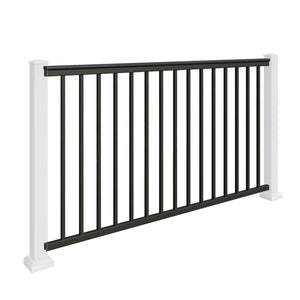
Because aluminium systems typically use vertical posts and rails rather than solid infill panels, they may allow wind to pass through more freely — reducing pressure buildup in certain configurations.
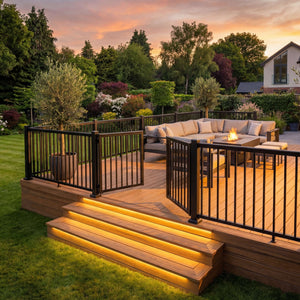
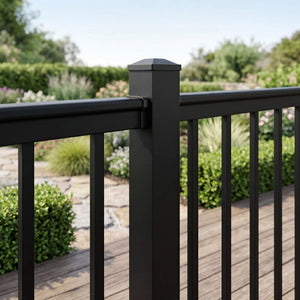
In exposed coastal or high-rise environments, aluminium balustrades are often considered a practical and durable solution. Explore our full aluminium balustrade collection to see systems suitable for high-level and wind-exposed rooftop installations.
Section 3 – Glass Balustrades on Roof Terraces
Glass balustrades are frequently chosen for rooftop spaces where preserving views is essential. Fully frameless or semi-frameless systems create a clean, minimalist finish that complements contemporary architecture.
However, glass panels create a continuous surface area. In highly exposed environments, this means:
-
Wind loading must be carefully calculated
-
Glass thickness and specification become critical
-
Fixing systems must be structurally robust
When correctly engineered, glass roof terrace balustrades are fully capable of meeting structural requirements — but specification is key.
Our glass balustrade collection includes fully frameless and semi-frameless systems designed for UK rooftop applications, combining panoramic views with structural performance when correctly specified.

Section 4 – How To Choose The Right Balustrade for Your Roof Terrace
Choosing between aluminium and glass balustrades is not just about appearance — it depends on exposure level, building height, structural support, and intended use.
When assessing your roof terrace, consider:
1. How Exposed Is The Roof?
-
Coastal location?
-
High-rise building?
-
Open countryside with strong prevailing winds?
-
Urban rooftop surrounded by taller buildings?
The more exposed the terrace, the more important structural wind calculations become.
2. What Is The Building Type?
-
Private dwelling
-
Apartment block
-
Mixed-use development
-
Commercial building
Multi-occupancy buildings may require higher load classifications and stricter compliance standards.
3. What Is The Primary Priority?
If your priority is:
-
Maximum structural resilience in high winds → Aluminium balustrades are often preferred
-
Uninterrupted views and architectural finish → Glass balustrades are often chosen
4. Has Structural Design Been Considered?
For exposed roof terraces, systems should be:
-
Properly engineered
-
Wind-load assessed
-
Compatible with roof construction
-
Securely fixed into structural substrate
A professionally specified roof terrace balustrade system ensures both compliance and long-term performance.
Professional Insight: Specification Over Style
In our experience working on roof terrace balustrade projects across the UK, the biggest mistake property owners make is choosing purely based on appearance.
While glass systems maximise views and aluminium offers structural simplicity, the correct decision depends on exposure level, building height, fixing method, and compliance requirements.
A properly specified roof terrace balustrade system ensures:
-
Compliance with UK safety guidance
-
Long-term structural stability
-
Compatibility with roof construction and waterproofing
-
Reduced future maintenance issues
When in doubt, structural performance should always come before aesthetics.
FAQs – Exposed Roof Terrace Balustrades
Are glass balustrades safe in high wind areas?
Yes — when correctly engineered. Glass balustrades must be specified with appropriate thickness, lamination, and fixing systems to withstand wind loads at height. Structural calculation is essential.
Are aluminium balustrades better for high-rise buildings?
In highly exposed or high-rise environments, aluminium balustrades are often preferred due to their lower wind resistance surface area and structural stability.
Do roof terrace balustrades need wind load calculations?
Yes. Roof terraces experience higher wind pressure than ground-level decking or balconies. Wind load assessment is a critical part of correct specification.
Which balustrade requires less maintenance on a rooftop?
Powder-coated aluminium balustrades are generally very low maintenance. Glass systems also require minimal upkeep but will need occasional cleaning to maintain clarity.
Do glass balustrades meet UK building regulations for roof terraces?
Yes — when correctly specified. Roof terrace glass balustrades must comply with Approved Document K and relevant structural loading standards. This includes minimum guarding height (typically 1100mm for roof terraces), appropriate glass thickness, lamination where required, and certified fixing systems. Professional specification ensures compliance.
Are aluminium balustrades more wind resistant than glass?
In very exposed locations, aluminium balustrades can offer lower wind resistance surface area due to their open design. However, both aluminium and glass systems can meet structural requirements when properly engineered. The key difference lies in wind loading calculations and system specification.
Structural Standards in the UK
In the UK, roof terrace balustrades are typically designed in accordance with Approved Document K (Protection from Falling, Collision and Impact) and relevant structural loading standards such as BS EN 1991. Wind exposure category, building height, and occupancy classification all influence specification requirements. For high-rise or coastal installations, structural assessment is especially important.
Final Thoughts
There is no single “best” balustrade for an exposed roof terrace — only the best system for your specific conditions.
-
For highly exposed or high-rise environments, aluminium balustrades are often preferred due to reduced wind resistance surface area and structural reliability.
-
For design-led projects where uninterrupted views are the priority, professionally specified glass balustrades remain a popular choice.
The key is correct structural assessment and UK-compliant specification.
If you’re planning a rooftop project, explore our full roof terrace balustrade collection or speak to our team for expert guidance on selecting the right system for your building and exposure level.