




Football Pitch Fencing for Schools and Academies: A Buyer's Guide

Schools and academies have a different set of priorities to clubs: safeguarding, durability under heavy daily use, low maintenance on a tight facilities budget, and a tidy appearance for the wider community who often use the pitches out of hours. Crucially, a school pitch is not subject to FA ground grading, so you are specifying for your own requirements rather than someone else's criteria. This guide explains what to look for in an education setting, and where a PVCu barrier fits. Our schools and academies fencing page covers the specifications in more detail.
For schools, the right pitch barrier is player-safe (it flexes on impact), maintenance-free (no painting or rust), durable under constant use, and visually tidy. Many sites pair a PVCu pitch barrier with a taller steel boundary or ball-stop fence for security and ball retention — they are two different jobs. Funding routes differ from clubs: capital facilities budgets, multi-academy trust funds and local authority routes are usually the starting point, though community use can open up more.
What Makes School Fencing Different
A school pitch is used far more intensively than a club ground — multiple lessons a day, breaktimes, after-school clubs and often community hire in the evenings and at weekends. The barrier has to cope with that, and with the safeguarding and safety expectations of an education environment.
- Safety first. No sharp edges, no rigid impact surfaces at child height, no protruding fixings.
- Durability. A material that shrugs off daily knocks and weather without degrading.
- Low maintenance. Stretched facilities teams cannot repaint timber every couple of years, and rust streaks on a school field look neglected long before they are unsafe.
- Appearance. A tidy, professional look reflects well on the school and reassures the community that hires it.
If you need to justify the choice of material to a governing body or trust, it helps to know that football's own governing body has moved decisively on this. From 2026/27 the FA prohibits solid brick, breeze block and concrete pitch perimeter barriers across the National League System, following a safety review prompted by the death of a young player who collided with a concrete pitchside wall. If concrete is no longer considered acceptable next to adult players, it is a difficult thing to defend next to eleven-year-olds.

Two Jobs: Pitch Barrier and Boundary
It is worth being clear about the two distinct roles fencing plays at a school, because they call for different products — and because the distinction also determines which funding routes are open to you.
Pitch perimeter barrier
PVCu — player-safe
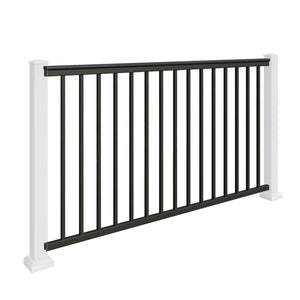
Defines the pitch, separates spectators and waiting pupils from play, and flexes on impact rather than resisting it. This is where post & rail or single mesh PVCu fits. Full double mesh is rarely necessary at a school unless the pitch also hosts a club playing in the National League System.
PVCu pitch barrierBoundary / ball-stop
Steel mesh — security & retention
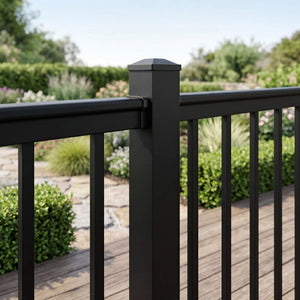
A taller steel system secures the site perimeter and keeps balls in. Usually installed alongside the PVCu pitch barrier rather than instead of it — the two do different jobs and sit in different places.
Steel boundaryFunding School Pitch Fencing
Funding for schools works differently from club football. Most sites fund fencing through capital facilities budgets, multi-academy trust funds, Sport England-linked school sport programmes, or local authority routes.
The Football Foundation is worth understanding properly, because the two jobs above land on different sides of its rules. Its fencing grant covers boundary and security fencing at sites outside the National League System — the site perimeter, ball-stop fencing and access gates — at up to 75% of project cost. Pitch perimeter barriers are on its explicit "cannot fund" list, whoever is applying. So a school seeking help with a secure boundary or ball-stop fence may have a route; a school seeking help with the barrier round the playing area does not.
Football funding generally requires the facility to be available for community football in the evenings and at weekends, and the applicant to have appropriate security of tenure. If your site already offers community use, more routes may be open than you assume — and if it does not, offering it may be worth considering on its own merits. Worth a conversation with your County FA facilities officer, who will know what is currently open locally.
Specifying for an Education Site
- Map the two jobs. Decide where you need a player-safe pitch barrier and where you need a secure boundary or ball-stop. Mark both on a site plan before you ask anyone for a price.
- Choose PVCu for the pitch side for safety and zero maintenance. Compare the whole-life cost rather than the purchase price — our comparison of PVC, steel and timber sets out what each costs to own over fifteen years, not just to buy.
- Plan gates for class access, groundcare machinery and community-use entry, with appropriate locking. Getting gate positions wrong is the most common regret on a school scheme.
- Get a combined quote so the whole scheme is costed and grant-ready together. Our 2026 price guide gives per-metre rates if you are building a budget first.
Fencing That Stands Up to School Life
The Norvale Sport PVCu system gives schools and academies a safe, durable, maintenance-free pitch barrier — and we can specify the secure boundary fencing alongside it. Supply only or fully installed, nationwide. Free quote within 24 hours.
Get a Free Quote Schools & Academies FencingNorvale Sport is a trading name of The Outdoor Look Limited, registered in England and Wales No. 11676614. VAT No. 232 7154 28.