



Glass vs Aluminium Balustrade: Which Is Right for Your Project?
If you are weighing up glass balustrades against an aluminium balustrade, you are not alone. They are the two most popular choices for outdoor decking, patios and raised areas in the UK, and both do a good job — but they do it differently. This guide compares the two material by material, factor by factor, so you can decide which one suits your project.
Appearance
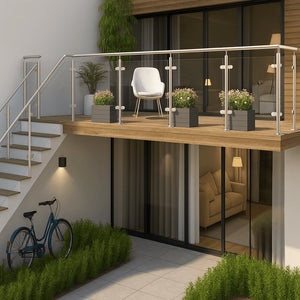
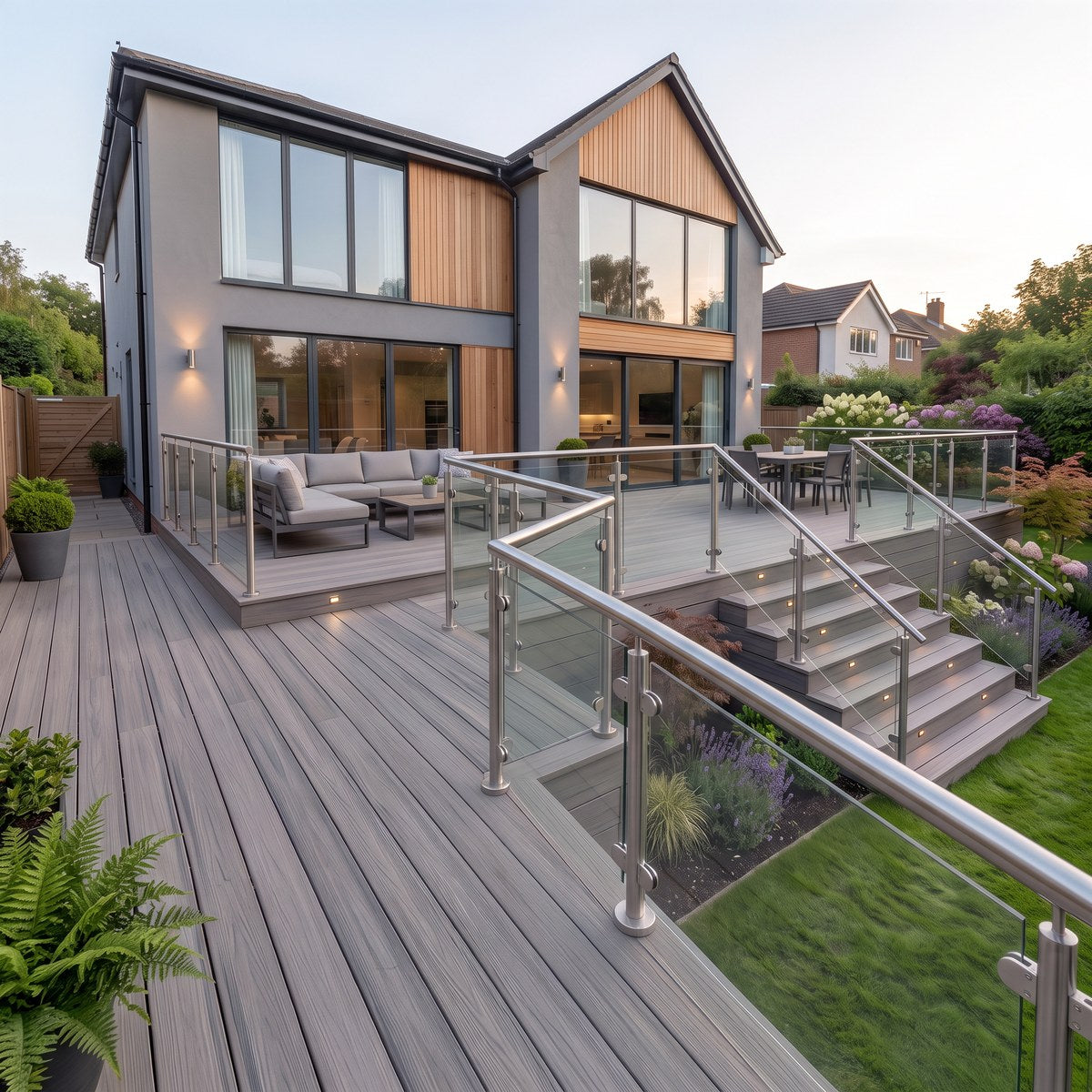
Glass and aluminium create two very different looks. Glass panels sit between slim posts or in a low-profile channel, leaving the space feeling open and uncluttered. The effect is sleek and modern, and it works particularly well alongside timber or composite decking where you want the materials around it to do the talking.
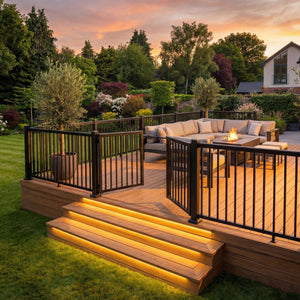
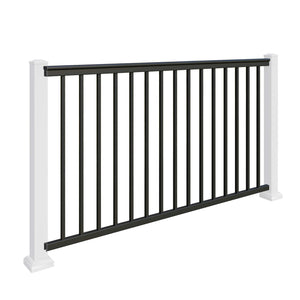
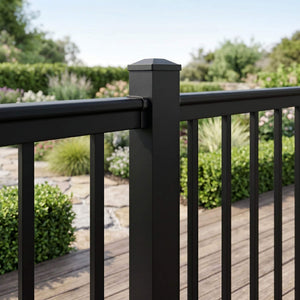
Aluminium has a more defined, architectural look. The horizontal rails create clean lines, and the matt black powder-coated finish gives it a contemporary edge that suits modern builds and darker colour schemes. If you want the balustrade itself to be a design feature rather than disappearing into the background, aluminium is the stronger choice.
Views
This is where glass pulls ahead. A glass panel is, by definition, transparent — nothing blocks the sightline. If your deck overlooks a garden, a valley or the coast, glass keeps the view completely open from any angle.
Aluminium horizontal rails are narrow, so they do not block views entirely, but they do break up the sightline. From a seated position on a low chair, you will notice the rails more than you would with glass. For a project where the view is the main reason for building the deck, glass is usually the better choice.
Privacy
The same transparency that makes glass good for views works against it when privacy matters. A clear glass balustrade hides nothing — neighbours and passers-by can see straight through. Tinted or frosted glass panels are available, but they add cost and reduce the view from your side too.
Aluminium horizontal rails, on the other hand, provide a degree of screening without fully enclosing the space. They allow light and air through while making it harder to see in from ground level. If your deck is overlooked or close to a boundary, aluminium gives you a better balance of openness and privacy.
Wind shelter
Glass panels act as a solid windbreak. On an exposed deck — a hillside garden, a coastal plot, or an elevated platform that catches the prevailing wind — glass makes the space noticeably more comfortable to sit in. It blocks the gusts without blocking the light, which is why glass is so popular on raised decking in exposed locations.
Aluminium horizontal rails allow air to pass through. In a sheltered garden that is fine, and some people prefer the airflow. But on an exposed deck, the wind comes straight through the gaps between the rails. If wind shelter is a priority, glass is the stronger option.
Maintenance
Aluminium is the lower-maintenance choice. The powder-coated finish resists weathering and does not need painting, oiling or treating. An occasional wipe down with soapy water is all it takes. The finish holds up well in rain, frost and UV, and because the surface is opaque, water marks and fingerprints are not visible.
Glass needs more attention to stay looking its best. Rain spots, fingerprints, dust and algae all show on a transparent surface, so you will want to clean the panels regularly — especially on the outside face where rain dries unevenly. The stainless steel posts, clamps and fittings on glass systems also benefit from periodic cleaning to prevent tea staining in coastal or damp environments. Glass is not difficult to maintain, but it does ask more of you than aluminium.
Suitability for guarding
If your deck, steps or stairs have a drop of 600mm or more, the edge needs guarding — a barrier that can resist a horizontal load. Both glass and aluminium can do this, but the specifics differ.
Our aluminium balustrade is load tested to the domestic (Category A) barrier loads in BS 6180:2011 and PD 6688-1-1. It is suitable for raised decks, steps and stairs with a drop of 600mm or more.
On the glass side, three of our four systems handle guarding: frameless glass balustrade, spigot glass balustrade and post and handrail glass balustrade. All three are designed in line with BS 6180:2011. You can browse all of these together on our guarding balustrade kits page.
The fourth glass system, semi-frameless glass balustrade, is for low-level use only — edges with a drop under 600mm. It does not have a handrail and is not a guarding barrier.
Budget
Aluminium is generally the more affordable option, particularly on longer runs. The system uses fewer components, the panels are lighter, and installation is quicker — all of which keep the overall cost down.
Glass varies by system. Semi-frameless is the most affordable glass option, using 10mm toughened panels between stainless steel posts. Spigot and post and handrail systems sit in the middle. Frameless channel is the premium end, using thicker laminated glass in a continuous aluminium base channel for the cleanest possible look.
For a like-for-like run of guarding on a straight deck edge, aluminium will typically come in lower than any of the glass guarding options. But the gap narrows on shorter runs, and the choice often comes down to what matters more to you — budget or the finished look.
Installation
Aluminium is lighter and quicker to fit. The system is surface-mounted with bolt-down base plates, and the horizontal rails slot into pre-drilled posts. A competent DIYer can install a straight run in a day.
Glass requires more care. The panels are heavier — particularly laminated glass for guarding-height installations — and need to be handled carefully to avoid chipping the edges. Fixing methods vary by system: spigots bolt to the deck surface, channels are fixed along the edge, and post and handrail systems use clamps or gaskets to hold the glass. Professional installation is not always necessary, but it is worth considering if you are working at height or on a complex layout.
Which should you choose?
Choose aluminium if you want a cost-effective, low-maintenance solution for raised decks, steps and stairs. It suits modern builds, darker colour schemes, and projects where you want a clean architectural look without the upkeep of glass. It is also the easier system to install yourself.
Choose glass if views and wind shelter are your priorities. Glass keeps the sightline completely open and blocks the wind, making it the better choice for exposed locations, elevated decks with a landscape to enjoy, and any project where you want the space to feel as open as possible.
Consider both. There is no rule that says you have to use one material everywhere. Some of the best-looking decks mix aluminium on the sides that face the house or the neighbours, and glass on the side that faces the view. It gives you privacy and wind shelter where you need them, and an open sightline where it matters most.
Not sure which suits your project? Browse all of our balustrades to compare systems side by side, or get a free balustrade quote and we will help you work out the best option for your layout.