



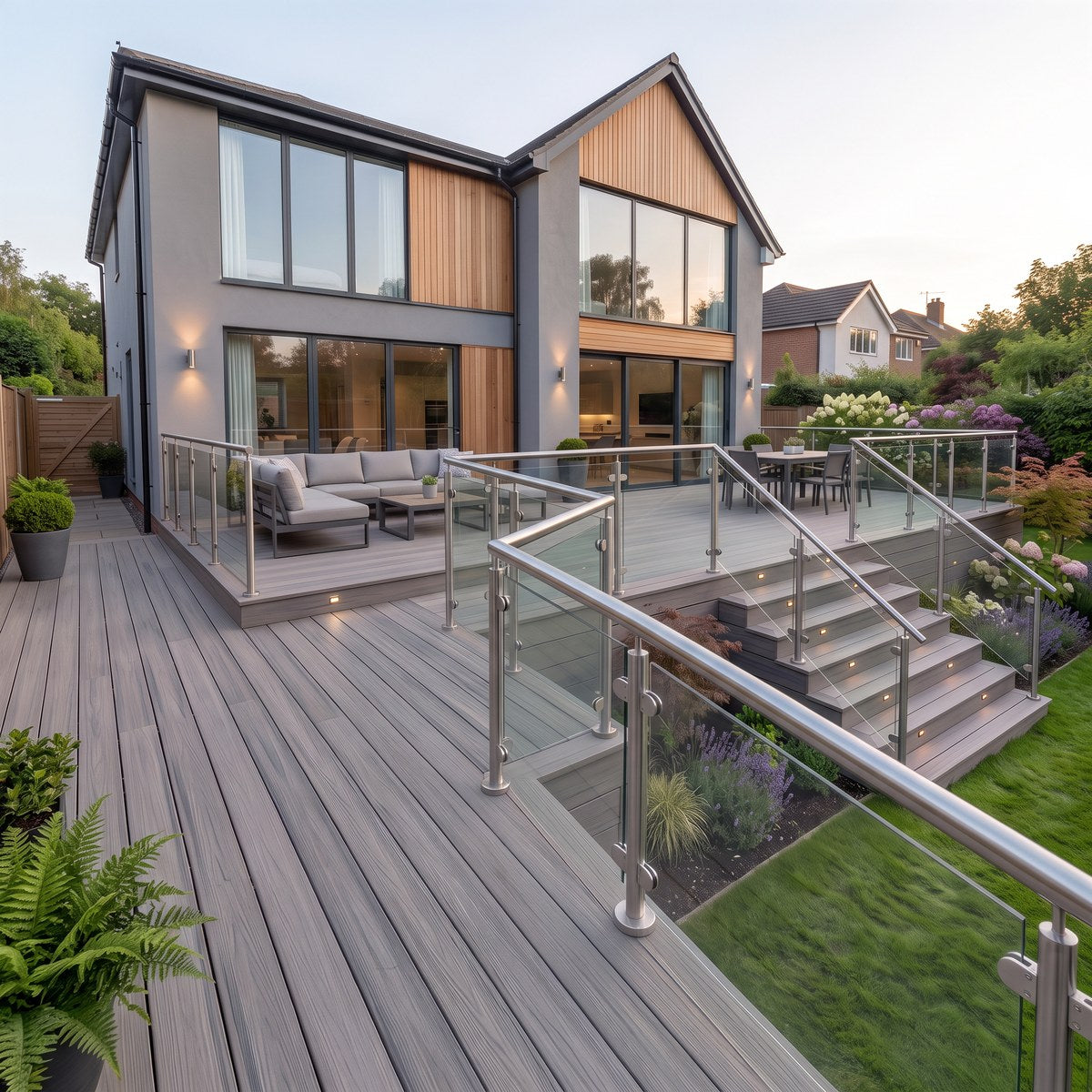
Decking Balustrade Ideas: Six Styles for Every Garden
Choosing the right decking balustrade can completely change how your outdoor space looks and feels. Whether you are working with a low-level patio deck or a raised platform overlooking the garden, the style of balustrade you pick sets the tone for the whole area. Here are six decking balustrade ideas to help you find the right fit, along with the practical details you need to know before you order.
1. Frameless Glass — Maximum View, Minimum Frame
If your deck looks out over a garden, countryside or coastline, a frameless glass balustrade keeps the view completely uninterrupted. Laminated glass panels sit in a continuous aluminium base channel with nothing above them — no posts, no handrail, no visual clutter. The result is a clean, contemporary edge that makes even a compact deck feel open and spacious.

Frameless glass works at guarding height, so it is suitable for raised decks with a drop of 600mm or more. The system is designed in line with BS 6180:2011, and all glass is made to measure. It is the most visually striking option on this list, and the one that photographs best if you are planning to sell or let the property.
2. Semi-Frameless Glass — The Affordable Glass Option
A semi-frameless glass balustrade gives you much of the same glass-panel look at a lower price point. Slim stainless steel posts hold 10mm toughened glass panels, creating a light, modern boundary without the cost of a fully frameless channel system.

This style is designed for low-level decks where the drop is under 600mm — a step down to a patio or lawn, for example. It does not have a handrail and is not intended as a guarding barrier for raised areas. If your deck sits close to ground level and you want something that looks good without blocking the view, semi-frameless is an excellent starting point.
3. Aluminium with Horizontal Rails — Bold and Contemporary
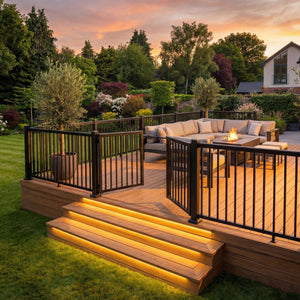
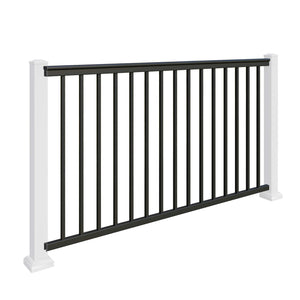
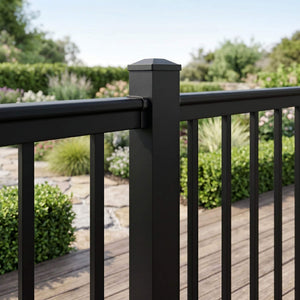
For a strong, modern look, an aluminium balustrade in black powder coat is hard to beat. Horizontal rails between slim aluminium posts give a clean, linear profile that suits contemporary garden design. The black finish works particularly well against timber, composite and stone decking — it frames the space without dominating it.

Aluminium is also one of the most practical choices. It is lightweight, corrosion-resistant and requires very little maintenance beyond an occasional wipe down. Our aluminium balustrade is load tested to the domestic (Category A) barrier loads in BS 6180:2011 and PD 6688-1-1, making it suitable for raised decks, steps and stairs with a drop of 600mm or more. Surface-mounted base plates bolt straight to the deck boards, so installation is straightforward for a competent DIYer.
4. Post and Handrail with Glass Infill — Classic and Solid
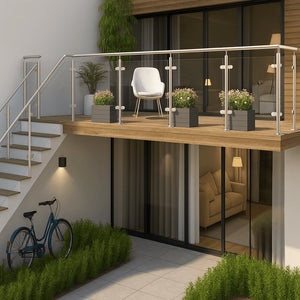
A post and handrail balustrade with glass panels between the posts offers the best of both worlds: the solidity and grip of a continuous handrail with the visual openness of glass. Stainless steel posts carry a 42.4mm tube handrail along the top, and toughened glass panels fill the gaps between each post.

This is the style to choose if you want something that feels substantial under the hand — particularly useful on stairs or where children will be leaning against the balustrade. The system is designed in line with BS 6180:2011 and works at guarding height for drops of 600mm and over. Posts and handrails are available in both satin stainless steel and black finishes.
5. Wire Rope — Nautical and Industrial
A wire balustrade swaps glass panels for horizontal stainless steel wire ropes tensioned between posts. The effect is lighter and more industrial — it suits coastal gardens, barn conversions and any space where you want a pared-back, functional look without closing off the view entirely.

Wire balustrade is designed for low-level areas where the drop is under 600mm. It is not intended as a guarding barrier for raised decks. The 3mm wire and 316 stainless steel posts handle coastal weather well, and the horizontal lines echo the look of yacht rigging and contemporary fencing. If your deck sits at or close to ground level and you want something with character, wire rope is a distinctive choice.
6. Mixed Materials — Different Styles for Different Zones
There is no rule that says every side of your deck has to match. If your decking wraps around a corner or has both a raised section and a ground-level area, mixing balustrades can look deliberate and smart rather than mismatched.

A common approach is to use glass on the side with the best view and aluminium on the side facing the house, where the view matters less and a solid rail is more useful. You could also run a guarding-height system along the raised edge and a low-level wire or semi-frameless panel along a step down to the lawn. Mixing materials lets you match the balustrade to what each section of the deck actually needs, rather than compromising on one style for everywhere.
What to Consider Before You Choose
Drop height and guarding
If your deck is raised 600mm or more above the ground below, you need a balustrade that functions as guarding. That means the system must be designed to resist a horizontal load and stand at the correct height. Frameless glass, post and handrail, and aluminium all work at guarding height. Semi-frameless and wire are for low-level areas only.
The 100mm gap rule
Any gap in a balustrade must be small enough that a 100mm sphere cannot pass through it. This is a standard safety requirement intended to prevent small children from getting their heads stuck. Glass panels, aluminium horizontal rails and wire ropes all satisfy this requirement when installed at the correct spacings.
Maintenance
Glass needs cleaning to stay looking its best — how often depends on how exposed the deck is. Satin stainless steel is the lowest-maintenance metal finish: 316 marine-grade steel resists corrosion from salt air and requires only occasional cleaning. Black powder-coated finishes look sharp but may show fingerprints and water spots more readily. Aluminium needs very little upkeep at all.
Planning permission
In most cases, adding a balustrade to an existing deck does not require planning permission. However, if the deck itself is raised more than 300mm above the natural ground level, or if the property is in a conservation area, you may need to check with your local planning authority before building.
Ready to Get Started?
All six styles are available to order online from The Outdoor Look, with stock items dispatching in 3 to 10 working days and made-to-measure glass in 3 to 4 weeks. If you are not sure which system suits your deck, get a free balustrade quote — send us your measurements and we will recommend the right option and give you a price.